
Marece
On belonging, entropy, and a recent visit to Uruguay.

My parents delivered me to the belly of the beast, JFK, under construction. Aren’t we all
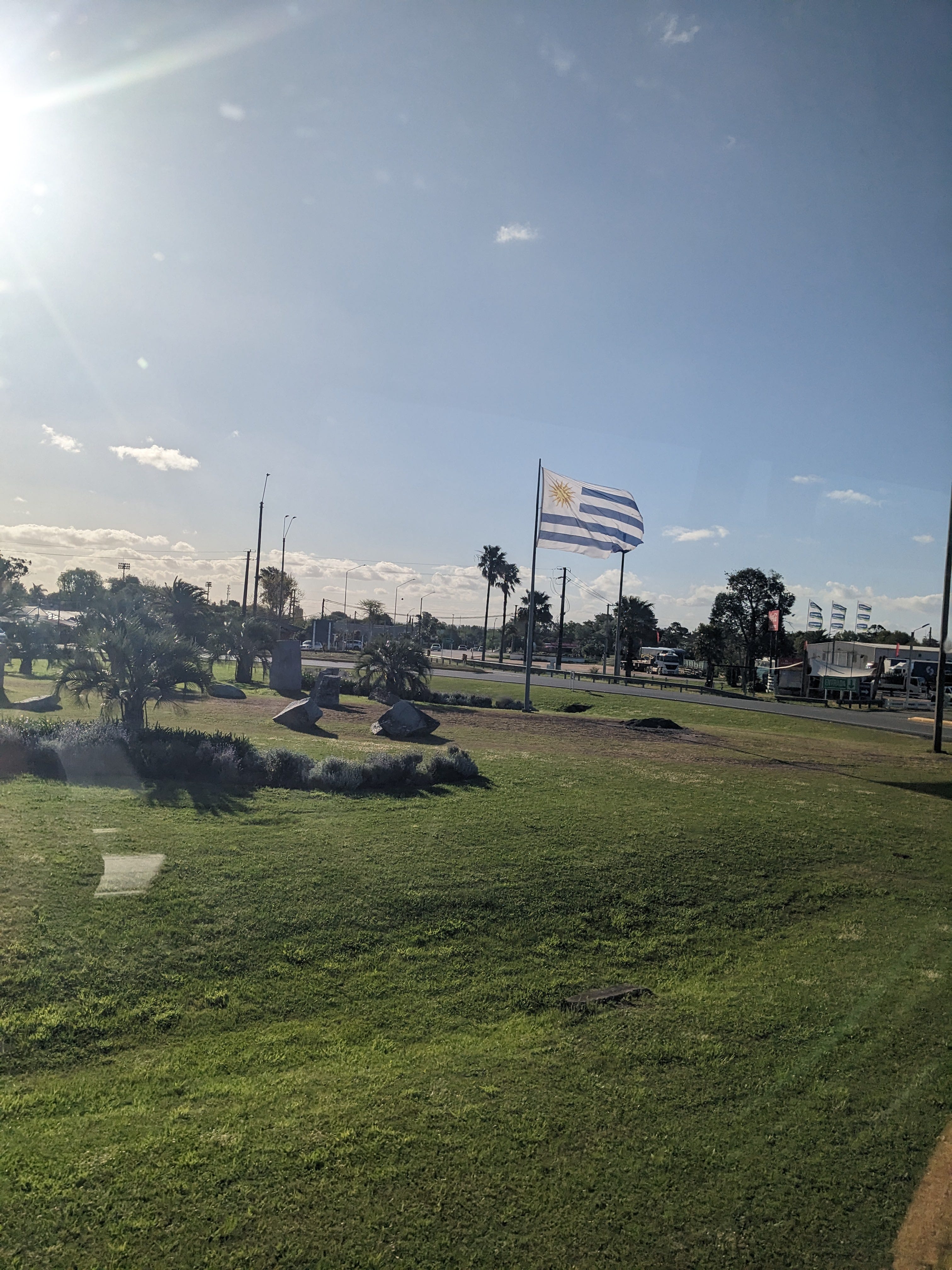
.
Something hit me crossing the rust-stained George Washington Bridge. The chaos of lanes merging, the skyline shifting, my parents remarking how everything looked different. Maybe it was visiting my aging grandmother that stirred me. Maybe it was seeing the world change around her that made me realize how quickly everything moves.
I’d spent the drive not in conversation but on hold with T-Mobile, trying to downgrade my expensive Verizon plan before leaving the country. Modern rituals: music loops, service agents, the illusion of control. Just before we pulled up to the terminal, the call dropped; thirty minutes of effort gone in an instant.
We pulled up to the terminal, cars honking, cops whistling everyone forward. My parents didn’t get out. Too chaotic, too exposed—just the frantic pulse of JFK under construction, everyone in everyone else’s way. So I leaned over the back seat, awkward angle, and kissed them each on the cheek.
My father turned first, caught my eyes for a moment. Then my mother. Just a second each, but long enough to say what couldn’t be said out loud: We see you. We love you. Come back.
“Send a message when you arrive.”
“I will.”
Then I was out, door slammed, bag in hand, and they were gone—swallowed back into the stream of brake lights and honking. I stood there for a second on the curb, the roar of the airport around me, before turning toward the sliding doors.
A part of me didn’t want to leave. I was anxious. In Uruguay they say estoy con Nancy; I’m with anxiety.
Nine seats per row, all the way in the back, 42K. Wedged between a quiet Vietnamese man and an aging Uruguayan who’d lived in New York for fifty years. 378 souls, shot through the air at 500 miles per hour, half-asleep and half-aware of our fragility. The safety video played like a dream sequence: oxygen masks dropping from a beach-bar tent, life jackets modeled on horseback in Argentina. The absurd choreography of survival.
By the time I landed, after a layover in Chile and a blur of movies, I’d been awake for 24 hours. My eyes were bloodshot, my body soft and stunned. I bought a SIM card, withdrew cash, missed a bus because I didn’t know you had to wave it down. Then I waited for the next one. A Brazilian woman beside me told me she came to Uruguay every summer to work. We smiled through exhaustion.
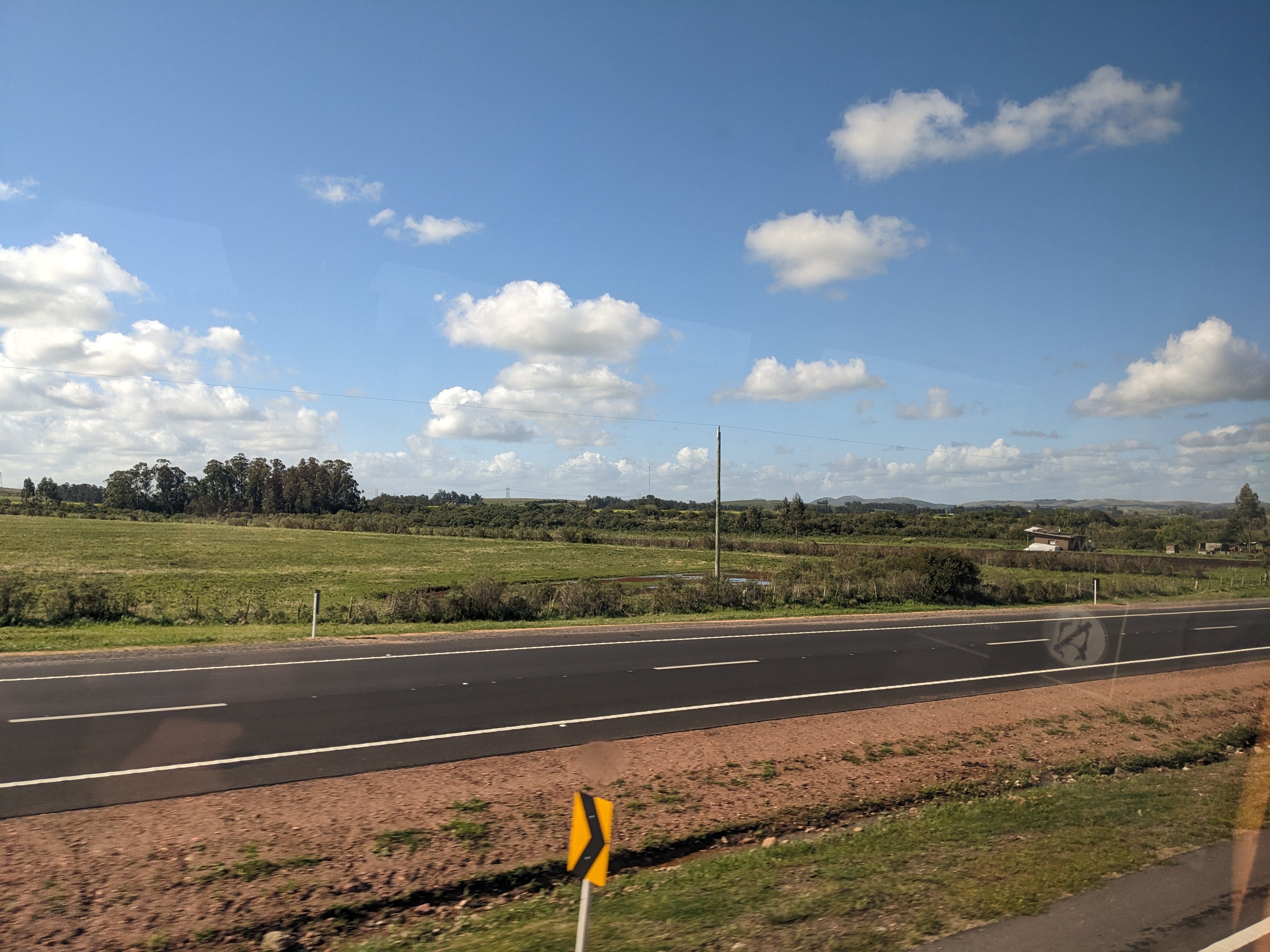
The bus ride south passed through a blue and green emptiness: cows, eucalyptus, scattered homes. The land looked quiet, underpopulated, as if the world had forgotten it
.
Juan picked me up in Rocha in a red, square-bodied pickup stacked with plywood and lumber, supplies for what was coming. Five years had passed since I’d seen him, yet I knew it was him from a distance: the same messy hair, the same sly glimmer in his smile. We drove through the small town, stopped at a supermarket for the week’s supplies, grabbed milanesa sandwiches, and headed to his land.
Juan hosts small gatherings he calls acampes, a few dozen people camping on his 200 hectares of wild Uruguayan countryside. They come to slow down, to cook together, to plunge into the pond after a sauna session, to listen to music, to be human again. No agenda, no self-help slogans, just time. The real intention is to turn that land into a small community; a neighborhood of people who want to live close to nature and each other.
There was a rough schedule scrawled on a whiteboard in the main kitchen, the town square of this temporary tribe. I’d start each morning in the sauna, plunge into the cool pond, climb the hill to my tent, and then drift toward the central geodesic dome where everyone eventually gathered
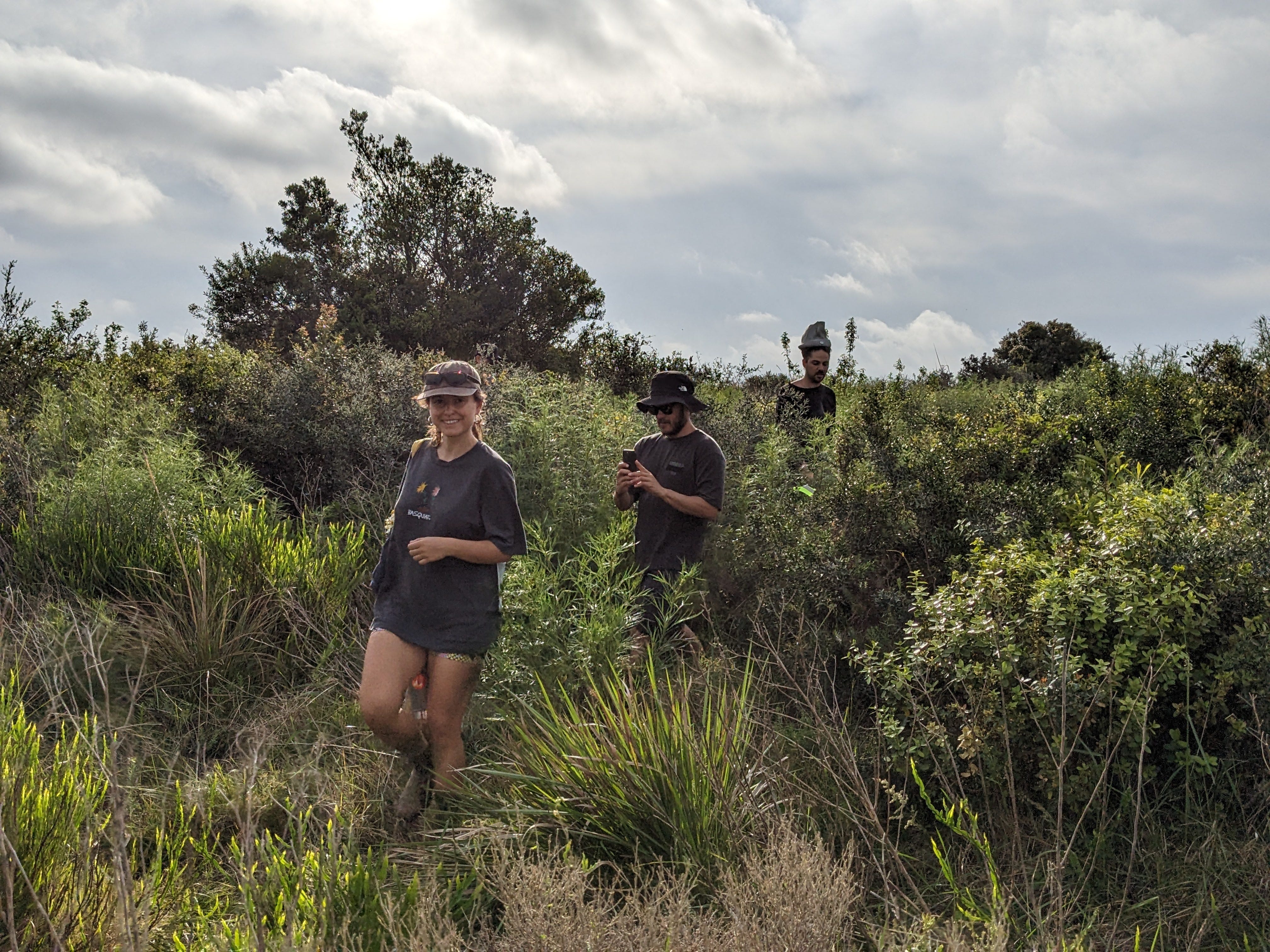
Faces became familiar: Agus, Vicky, Chino, Dragoncito, Wiki, Cami, Juancho, JP, Lu. All unique frequencies vibrating together in the middle of nowhere.
A topic that kept resurfacing in our conversations was how we make choices. Agus, a soft-spoken engineering wizard of sorts, talked about making decisions using entropy as a guide.
He explained that in the vast scope of the universe, entropy, the tendency toward disorder, isn’t chaos but potential. Every extinguished star, every cooled planet, adds to a kind of cosmic memory. Energy, he said, is experience in motion, and darkness, the calm after energy burns out, holds the deepest potential because it “remembers” everything that came before.
So his framework is simple: make choices that increase the potential energy of life around you. Actions that ignite others, that ripple outward. Give someone a job, and you don’t just change their day; you shift the field around them.
It reminded me of a mentor who once chose to guide me. Just a few nudges, small conversations, a handful of books. But those gestures changed the trajectory of my life. That’s entropy too, stored memory, transformed energy, passed between people. I wouldn’t be where I am now if it weren’t for that person, and it’s likely the people closest to me would be somewhere different as well.
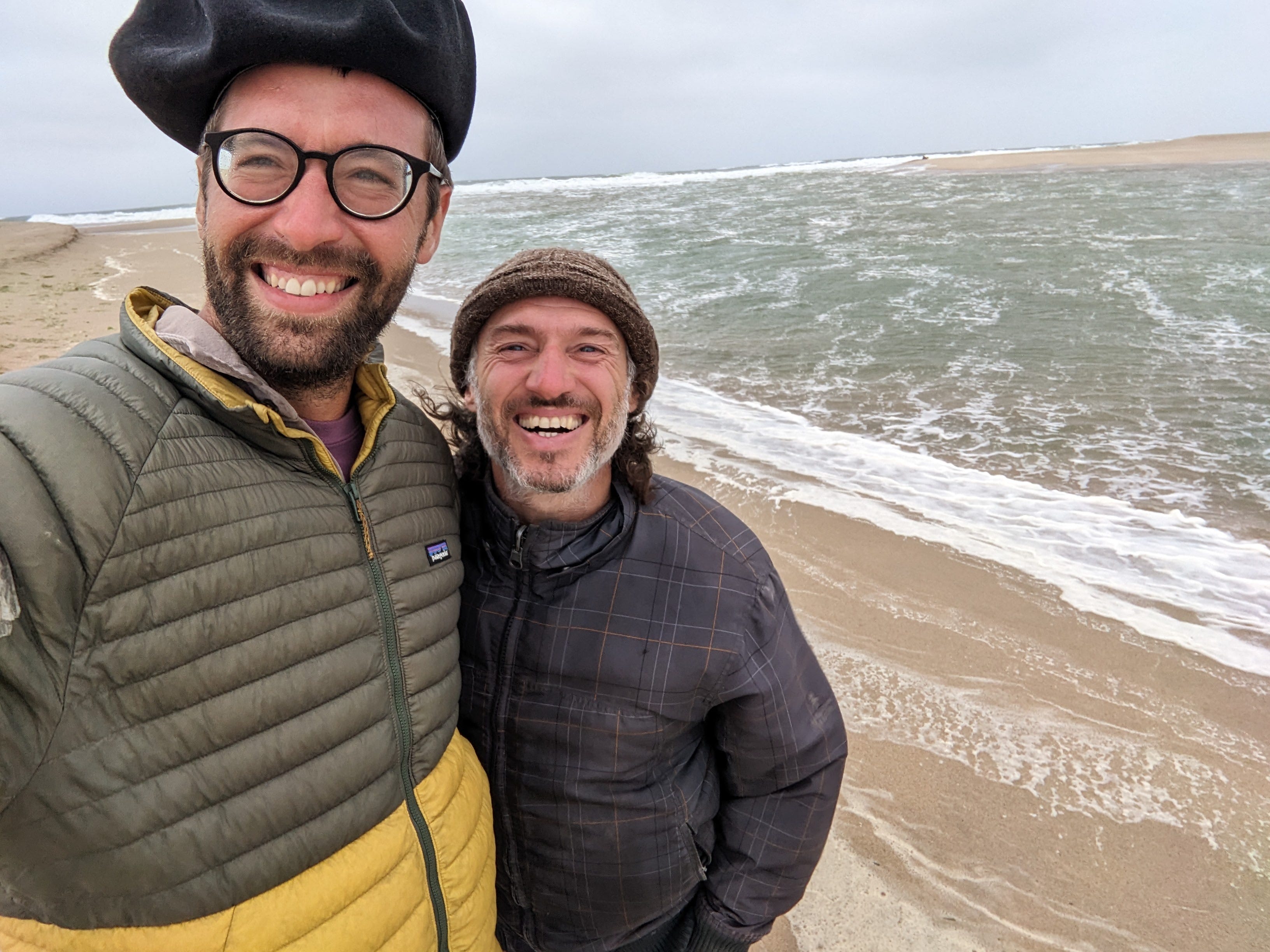
Later, Juan shared his own compass for decisions: “I choose the direction that makes the most smiles.
”
Between the two of them, I started to see something clearly. The universe is burning out, yes, but not evenly. There are pockets of radiant expression, moments of light that multiply when people gather, connect, and create.
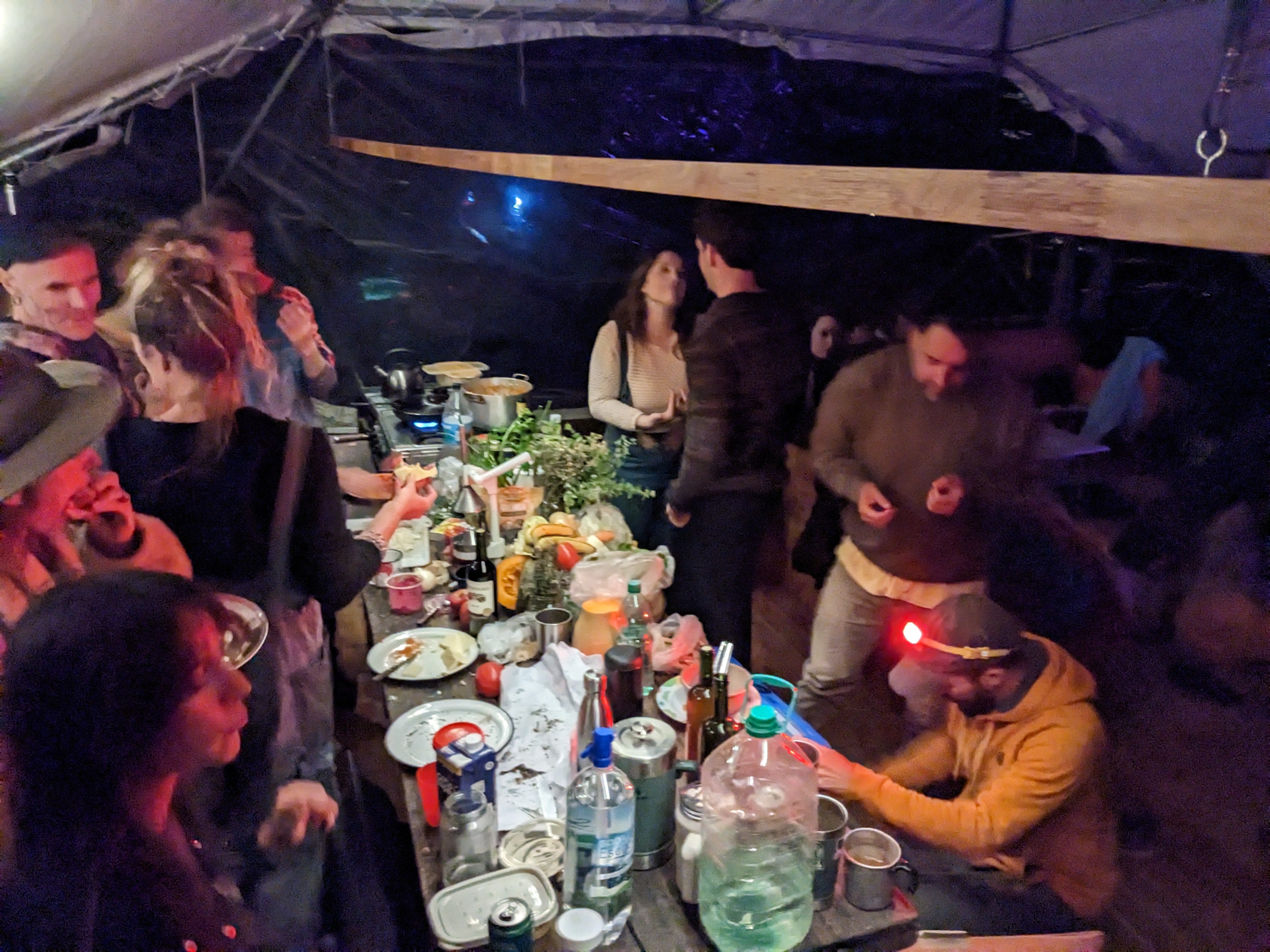
The acampe was one of those pockets. Entropy and joy mixed freely there: homemade vermouth, wood smoke, laughter, deep conversation, late-night guitars. A temporary village that reminded me how rare it is to simply exist together without transaction or agenda
.
Most of the people there were Argentinians who’d moved to Uruguay, refugees from chaos, drawn by calm. They’d come for better politics, stability, and fewer people. In their own way, they were building an ark, a self-sufficient life raft as the world’s noise swirled around them.
Uruguay, in that sense, is a tero’s nest. The tero, a coastal bird, is loud and defiant, faking injury to lure predators away from its grounded nest hidden in tall grass. In a way, Brazil and Argentina are the frantic, noisy protectors, and Uruguay is the quiet nest between them, small, overlooked, and safe in the turbulence
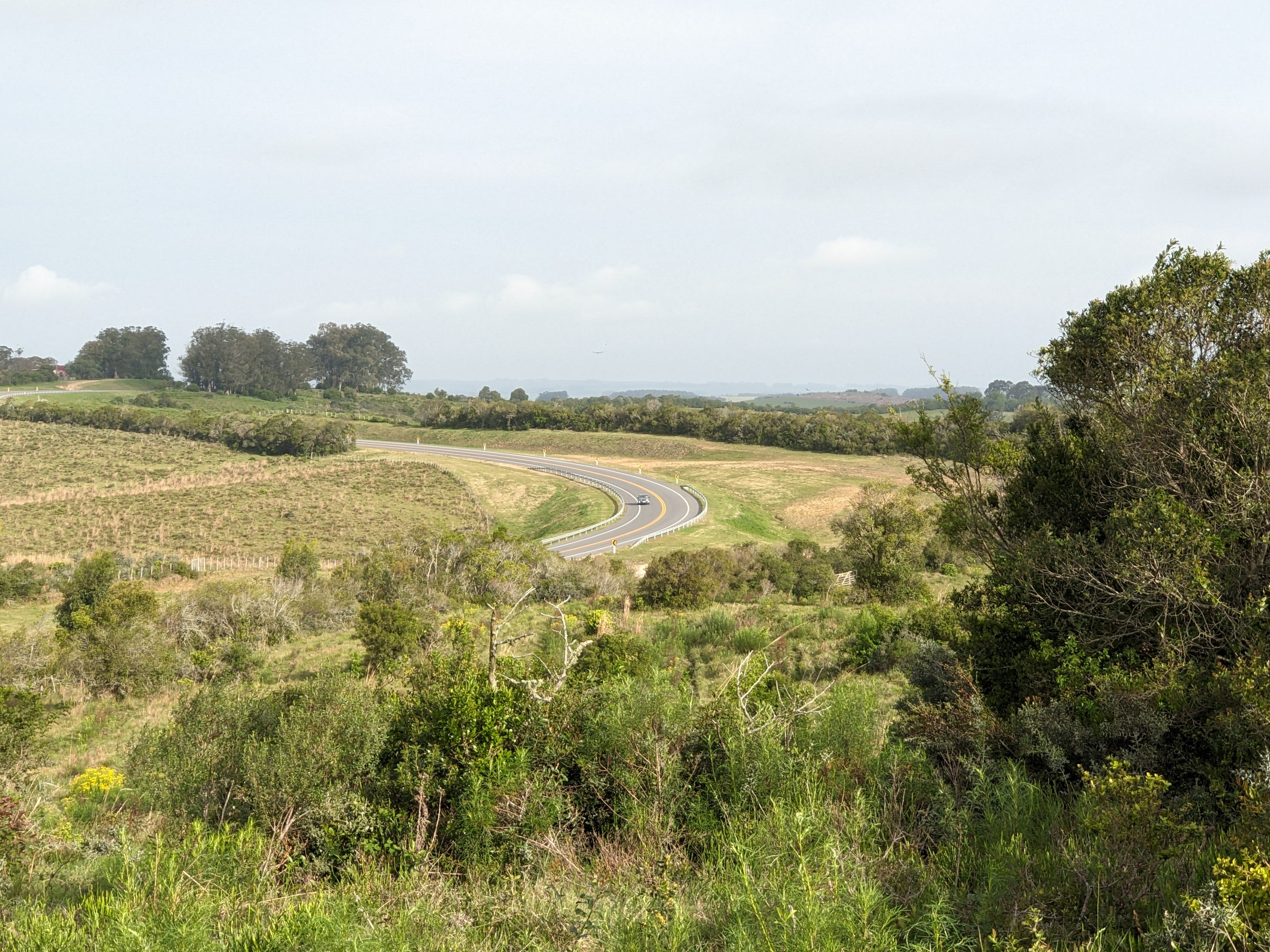
Maybe that’s what we’re all searching for: a little corner of low entropy in a high-entropy world. A space to slow down and feed energy back into something real; connection, conversation, community.
Entropy isn’t decay; it’s memory. Every time we choose to gather, to share, to build, we’re imprinting meaning into the system. The universe may be cooling, but it’s not done learning with us yet.
In Uruguay, there’s a different way of saying you’re welcome. Instead of de nada, “of nothing,” they say merece. It means you deserve it.
You deserve it, not in the sense of reward, but of belonging. You deserve to be seen, to sit around a table, to make something together, to create more smiles than you destroy. Maybe that’s what all this is really about; building pockets of light and laughter instead of running down the path of consumption and distraction
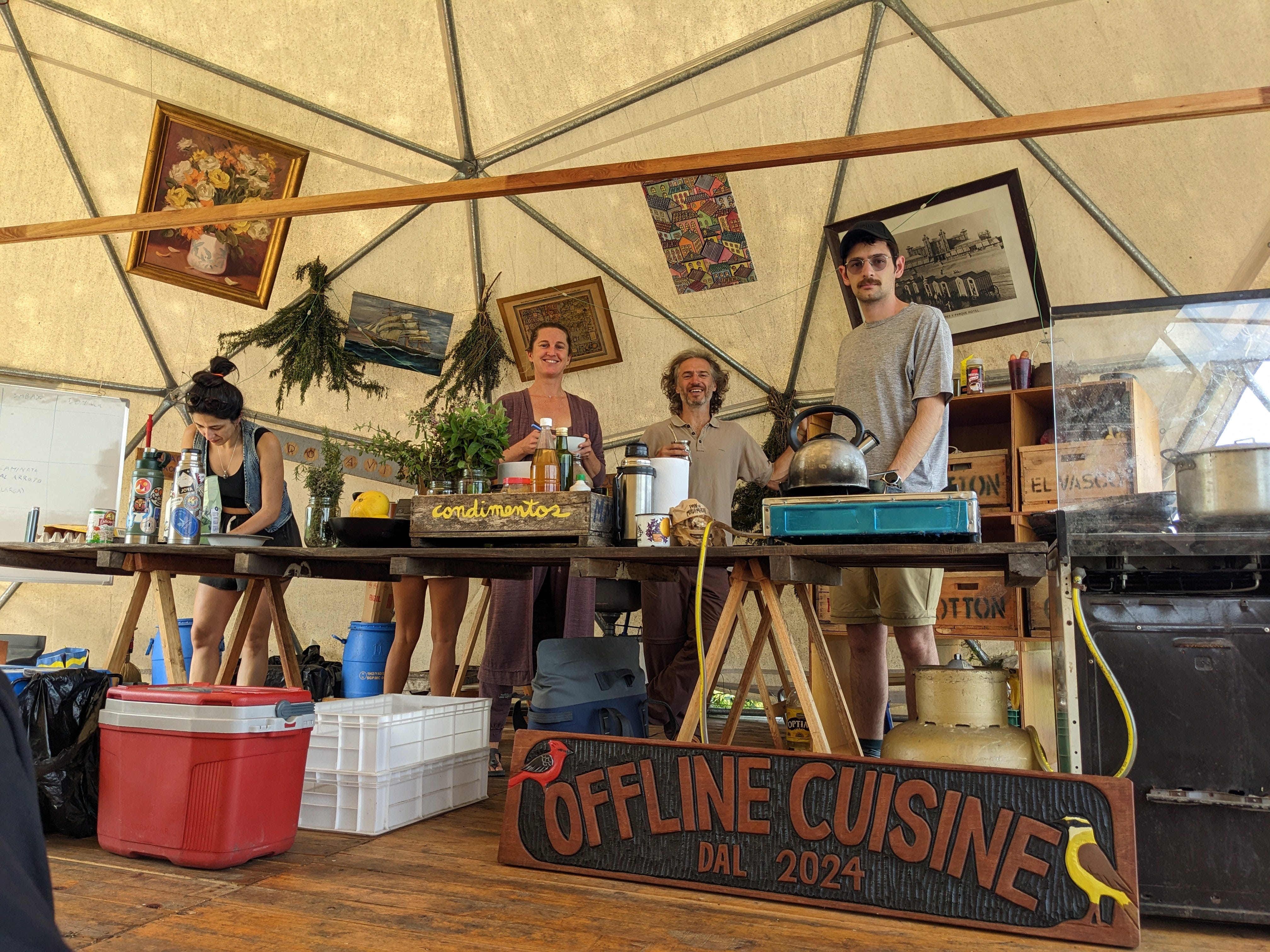
We don’t need to save the world; we just need to keep each other warm while it turns.
ps. thank you all for being with me, until we share the next horizon,
Tim
You have a lovely story Tim. I was lucky to meet you!!!
Love it! Thank you for your kind words. I hope to see you again in some part of the world and wish you good luck in your personal journey.